CÔGEIMU CREATOR COUNTDOWN
金子尊 インタビューCÔGEIMU CREATOR COUNTDOWN
Kaneko Takeru interview
展示開始に向け、10月7日から9日の3日間、制作メンバーそれぞれの視点から『ARE YOU THERE?』を振り返るインタビュー企画「CÔGEIMU CREATOR COUNTDOWN ― 3 DAYS / 3 CREATORS ―」をお届けします。 Counting down to the opening of the exhibition, “CÔGEIMU CREATOR COUNTDOWN ― 3 DAYS / 3 CREATORS ―” looks back on “ARE YOU THERE?” from the point of view of each member of the team, over three days from 7 to 9 October.
10月7日|塩見亮介(担当:鍛金・造形)
10月8日|金子尊(担当:エンジニアリング)
10月9日|カミエナ(担当:ディレクション・プロデュース)
7 October | Shiomi Ryosuke (metal hammering and sculpting)
8 October | Kaneko Takeru (engineering)
9 October | KamiEna (direction and production)
工芸、技術、企画という異なる視点から、作品が生まれるまでの背景や制作の裏側を紹介します。 From three different angles, craft, technology and concept, we share the background of how the work came to be and what went on behind the scenes.
2日目は、エンジニアリングを担当した金子尊です。 Day two is Kaneko Takeru, who handled the engineering.
プロフィールProfile
金子尊Kaneko Takeru
エンジニア兼テクニカルアーティスト(担当:エンジニアリング)Engineer / Technical Artist (engineering)
“日本文化の1ページ”を創ることを目標に活動するアート・ゲームクリエイター。ゲーム・日本美術・アニメに救われた経験からクリエイターを志し、独学でプログラミング・3DCG を習得。現在は都内のアートコレクティブでアート制作に携わる。An art and game creator aiming to write “a page of Japanese culture”. Having been saved by games, Japanese art and anime, he taught himself programming and 3DCG and now creates art with a Tokyo-based art collective.
インタビューInterview
Q1今回の制作で、一番印象に残っている出来事・瞬間は?What moment from making this work stays with you the most?
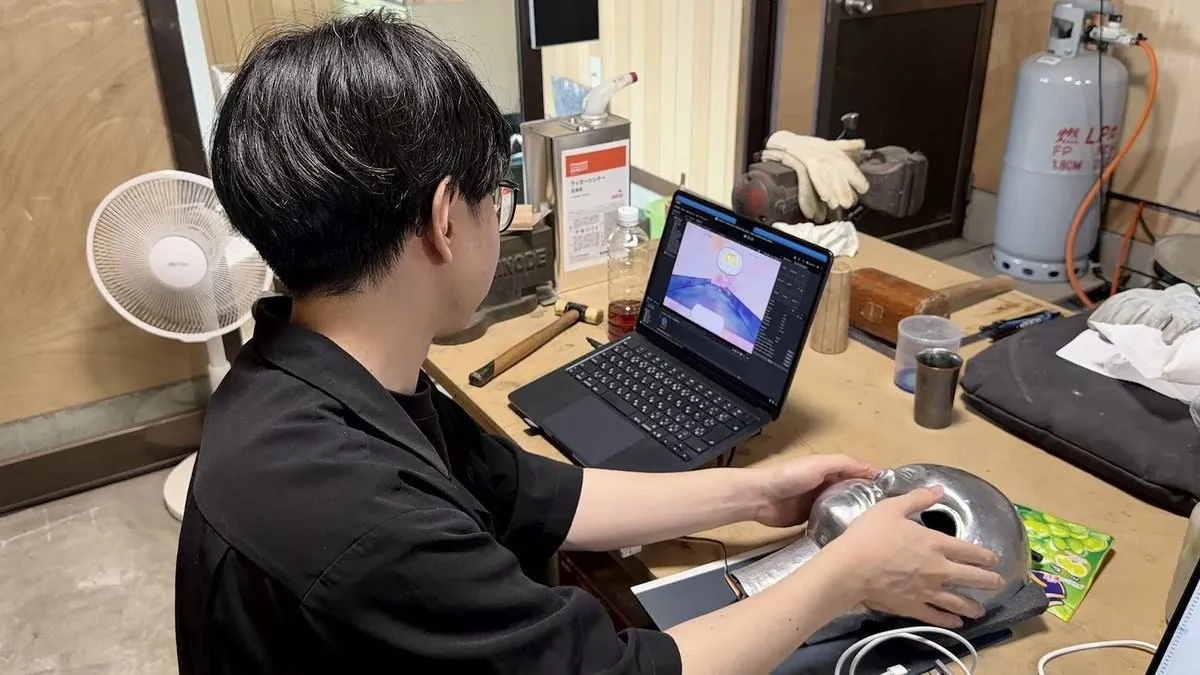
一番印象に残っているのは、塩見さんの鍛金工房や東京藝術大学の工房で制作した時間です。金槌の音が響くすぐ横で、2メートルもある金属作品に囲まれながら、ノートパソコンを広げてコードを書く。工房の机は金属製なので「通電したら危ないね」と木の板を持ってきてもらい、その上で作業していました。普通ではありえない光景で、ワクワクが止まりませんでした。 What stays with me most is the time spent working in Shiomi’s metalworking studio and in the workshops at Tokyo University of the Arts. Writing code on a laptop right next to ringing hammers, surrounded by metal works two metres tall. The workshop tables were metal, so someone brought a wooden board, saying “it’d be dangerous if it conducts electricity”, and I worked on top of that. It was a scene you would never normally see, and I couldn’t stop being excited.
Q2制作の中で、一番大変だったことは?What was the hardest part of making it?
一番大変だったのは、温度という特殊な入力を扱うことでした。これまではソフトだけを作ってきたので、センサーなどのハード側まで担当するのは初めてで、自分の中で一番の不確定要素でした。 The hardest part was dealing with an unusual input: temperature. Until now I had only made software, so this was my first time handling the hardware side too, such as the sensors, and it was the biggest unknown for me.
ソフトは書いた通りにしか動きませんが、ハードが絡むと、現実世界のさまざまな干渉で結果が乱れます。そうした揺らぎをどう吸収するかを考えるのは、大変でもあり、楽しくもありました。 Software only does exactly what you write, but once hardware is involved, all kinds of interference from the real world disturb the results. Working out how to absorb that wavering was both hard and fun.
Q3「工芸 × ゲーム」だからこそ生まれた面白さや価値は、何だと思いますか?What fun or value do you think came about precisely because it is “craft × game”?
普段は触れられない工芸に触れることでゲームを遊べる。まずはそこに楽しさがあると思います。 You get to play a game by touching a piece of craft you usually can’t touch. I think the fun starts there.
パソコンならキーボードやマウス、ゲーム機ならコントローラーがインターフェースになりますが、この作品ではそれが工芸作品です。だからこそ、金属が体温を伝えることや、作品そのものが持つ存在感を意識しながら、体験を調整する必要がありました。普段のゲームなら取らない演出や手法も選んでいます。 On a computer the interface is a keyboard and mouse; on a console it’s a controller. In this work, it’s a piece of craft. That is why we had to tune the experience while keeping in mind how the metal passes on body warmth and the presence the work itself has. We chose effects and methods we would never use in an ordinary game.
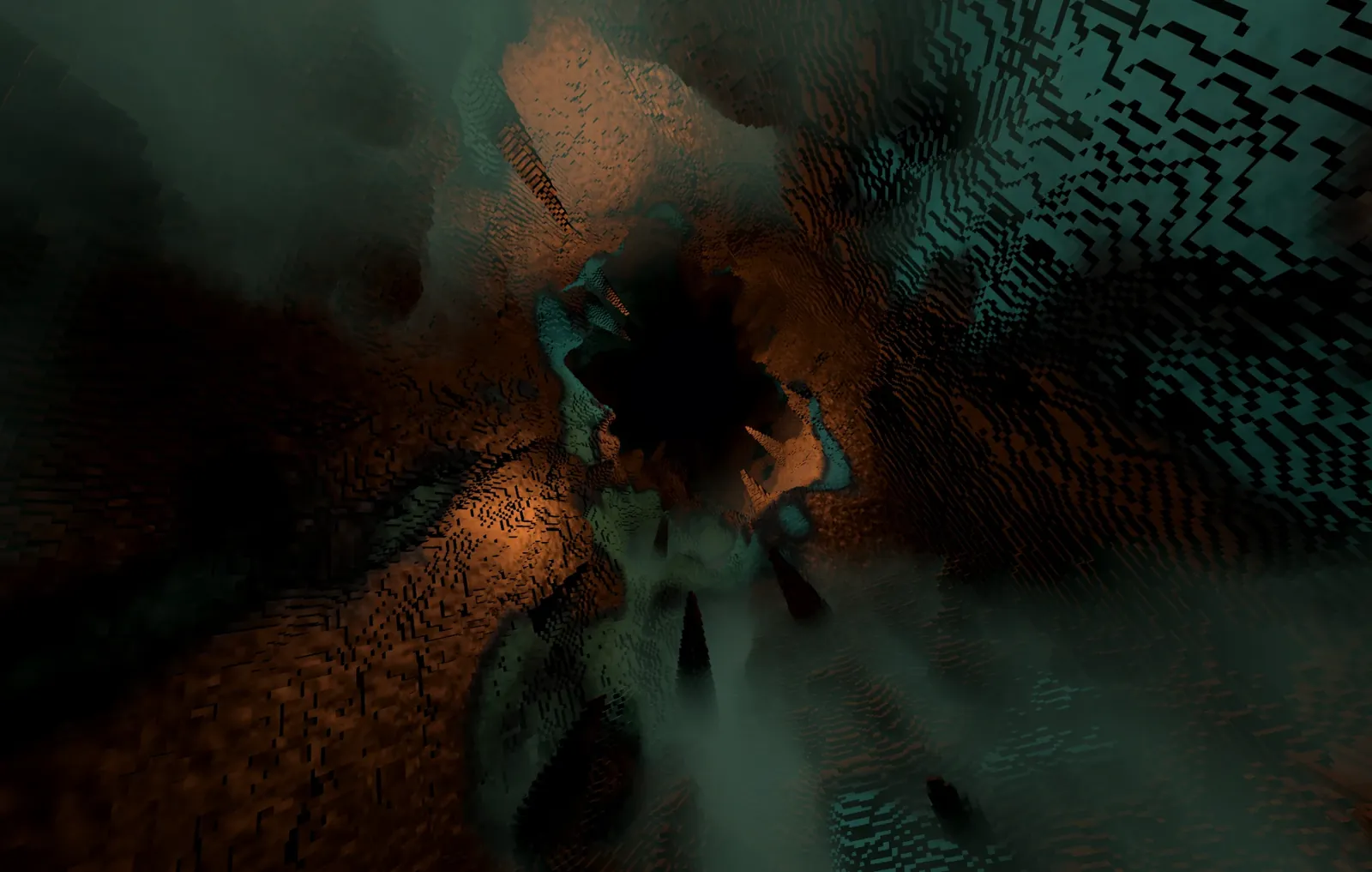
たとえば作品の外観は銅でできているので、ゲーム内の世界も銅の鉱物で作りました。そうすると、映像が映ったときに作品とすごく一体感が出ます。四角い画面という制約もなく、一点の工芸作品への「回答」としてソフトを作れる。ハードとソフトが同時に進みながら、互いに良くしていけたことが、工芸×ゲームならではの価値だと思います。 For example, because the outside of the work is copper, we built the world inside the game from copper minerals too. Then, when the images appear, they feel completely at one with the work. Without the constraint of a rectangular screen, we could make the software as an “answer” to a single piece of craft. I think the hardware and software moving forward together and improving each other is the value only craft × game can give.
Q4実際に体験する人に「ここを見てほしい/感じてほしい」と思うポイントは?What would you like people who play it to look at, or to feel?
何を感じるか、何を受け止めるかは鑑賞者次第だと思うので、個人的には特にありません。 What people feel and take away is up to them, so personally I don’t have anything in particular.
強いて挙げるならば、カガネの可愛さでしょうか。 If I had to pick something, perhaps how cute Kagane is.
Q5一般的なゲームではなく「彫刻の中で動くゲーム」を開発する上で、特に違ったことは?What was especially different about developing “a game that runs inside a sculpture” rather than an ordinary game?
一番の違いは、ハードそのものが彫刻だということです。ある意味、今回作ったソフトは、彫刻に魂を宿す役割でした。だから常に彫刻の姿形を考えたうえで、それに合うビジュアルや反応、見え方を探しました。彫刻で遊ぶときにストレスを感じない速度感に落ち着けることも、その一つでした。 The biggest difference is that the hardware itself is a sculpture. In a sense, the software we made had the role of giving the sculpture its soul. So we always thought about the sculpture’s form first, then looked for visuals, responses and ways of being seen that suited it. Settling on a pace that doesn’t feel stressful when you play with the sculpture was one of those things.
Q6展示作品として安定して動かすために、最も苦労したこと・工夫したことは?What did you struggle with most, or work out, to keep it running reliably as an exhibited work?
一番苦労したのは、完成までの時間が短いなか、彫刻の本体がすでにフランスへ渡った状態で調整しなければならなかったことです。展示環境で問題なく動くように、見た目を保ちつつ何を削って軽くするかを考え続けました。 What I struggled with most was having to tune it, with little time before completion, after the sculpture itself had already gone to France. To make sure it would run without trouble in the exhibition setting, I kept thinking about what to cut to make it lighter while keeping how it looks.
本体がない代わりに、まず温度を擬似的に入力する仕組みを作って試しました。さらに、わざと負荷の高い環境を用意して性能が出るかを確かめたり、3日間連続で動かして性能が落ちないかをテストしたりしました。あとは繰り返しデバッグして、改善できる箇所を一つずつ潰していく。本当に地味な作業の積み重ねでした。 Without the sculpture, I first built a way to feed in simulated temperature and tested with that. I also deliberately set up a high-load environment to check it still performed, and ran it for three days straight to make sure performance didn’t drop. After that, it was repeated debugging, fixing what could be improved one by one. It really was an accumulation of unglamorous work.
Q7体験者からはほとんど見えないけれど、実はかなりこだわった技術や仕組みはありますか?Is there any technology or mechanism, almost invisible to players, that you put a lot of care into?
一番こだわったのは、プレイ中の洞窟をボクセル(小さな立方体)でランダムに生成していることです。洞窟は一度として同じ姿にならず、延々と違う表情を見せ続けます。 What I cared about most is that the cave you play in is generated at random from voxels (small cubes). The cave never takes the same shape twice and keeps showing a different face, endlessly.
無機的な計算の重なりによって有機的なものが生まれる。単純なルールの積み重ねから複雑なかたちが立ち上がる、いわば「創発」です。本物の洞窟や鉱物も、無機物の積み重なりが有機的なものに昇華します。ゲームの中でも、そんな有機物と無機物が重なり合う美しさを表現できたと思っています。また、それをリアルタイムで生成しても問題ない処理負荷に収めています。 Something organic arises from layers of inorganic calculation. Complex forms rise out of piled-up simple rules: what you might call “emergence”. Real caves and minerals, too, are inorganic matter that builds up into something organic. I think we managed to express, inside the game, the beauty of the organic and the inorganic overlapping like that. And we kept the processing load low enough to generate it in real time without problems.
体験者からは見えませんが、開場・閉場に合わせた自動起動や自動アップデートなど、無人で回り続ける展示運用も頑張ったところです。 Players can’t see it, but I also worked hard on running the exhibition unattended, with automatic start-up and updates timed to the venue’s opening and closing.
最後に、Anima Ludens(フランス展示)に向けて一言Finally, a word ahead of Anima Ludens (the exhibition in France)
ゲームを文化として大切にしてきたフランス、その中でも古代から現代まで芸術が息づく街アルルで、この作品を届けられることを楽しみにしています。 I’m looking forward to bringing this work to France, a country that has long cherished games as culture, and to Arles in particular, a city where art has lived on from ancient times to today.